
"washed coffee grades"
9000 article(s) found

Yega Xuefei washed Woka Coffee Taste and Flavor characteristics of Waka washed with Yega Xuefei Water
For professional baristas, please follow the Coffee Workshop (official Wechat account cafe_style) Ethiopia Washed Yirgacheffe Worka G1 country: Ethiopia Grade: G1 production area: Worka Baking degree: shallow Baking method: washing Variety: local Native species treatment Plant: Waka Cooperative Flavor: lemon, Kumquat, White Grape Juice Yega Snow itself
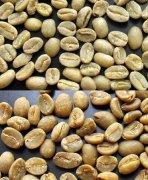
Grading of raw coffee beans there are two ways to grade raw coffee beans.
There are two ways to classify raw coffee beans, one is the filter number, and the other is the elevation. It is divided by the filter number, and the size is size in terms of the screen size. Round beans are generally smaller than flat beans, between 8-13 and 12-29. 8, 9, 10. 12, 13. 18. 29 = small, medium, ordinary. Quasi-big. Big, extra large. The bigger the size, the bigger the beans. Like SC-.

What exactly does the name of coffee mean?
1. What is the amount of information contained in the name of the raw coffee bean? 2. Why is it that sometimes the manor comes first in the name of the coffee bean, and sometimes the description of the treatment and grade is interspersed with it? what is the naming rule? Is there a uniform standard? 3. How to see the grade from the name of the raw coffee bean? This article will provide an in-depth answer to how to treat the naming of coffee beans, and

Basic knowledge of fine coffee specifications and grades of coffee beans
a. Washing type / non-washing type: in the sink, after rubbing with water and utensils, the pulp and gum are removed and dried, which is called washed coffee beans with uniform quality. Non-washing type: after the sun is naturally dried, the pulp and peel is removed by a sheller, and its quality is unstable. b. The fruit of flat bean / round bean coffee is made up of two oval seeds opposite each other. One that connects with each other.
Coffee quality grading-coffee bean grading
There is no internationally accepted standard for coffee quality grading, and the grading method varies from country to country. Therefore, coffee classification is based on some of the characteristics applicable to each producing country. The sample of coffee beans taken from a bag is judged according to the standards of the producing country, the samples are rated, and most of the coffee is good or bad according to the evaluation.
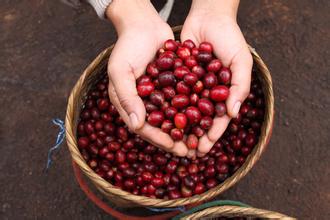
Distinguish coffee beans and the grading of coffee beans how to distinguish the quality of coffee beans coffee knowledge
● distinguishes the key names and specifications of coffee beans the name of the port of export of ● can tell the shipping route from the name of the port of exit marked. Coffee from the same origin or the same brand has a certain route, so it is also exported from the same port. For example, if it is marked "Brazil." "Santos" means that this is coffee exported from Santos, with the exception of those marked "mocha".

Comparison of coffee bean grade flavor of Panamanian jadeite manor brand coffee how much is a cup of rose coffee
Professional coffee knowledge exchange more coffee bean information please follow the coffee workshop (Wechat official account cafe_style) Panamanian Emerald Manor in the coffee world has always been a myth, its position in the coffee world, just like the DRC Romanee-Conti in the red wine world, the estate produces Rose summer varieties, flavor is unparalleled, has also won numerous world champions

The size, specification and grade of coffee beans. Fine coffee.
A, coffee can be divided into washing type and non-washing type according to specifications, and can also be divided into flat beans and round beans. Washing type: in the sink, after rubbing with water and utensils, the pulp and colloid are removed and dried, which is called washing coffee bean with uniform quality. Non-washing type: after the sun is naturally dried, the pulp and peel is removed by a sheller, and its quality is unstable. The fruit of coffee is made up of two oval shapes

Ethiopian Coffee Bean Flavor Taste Estate Introduction Ethiopian Coffee Bean Introduction
For coffee fans, don't care how the beans look, the most important thing is to drink. Ethiopian washed beans are much more stable than sun-dried beans, whose flavor fluctuates greatly from year to year, so be sure to cup them several times before buying them in large quantities. Good sun-baked beans have a much deeper flavor than washed beans, but poorly treated sun-baked beans are sure to be speechless, which is what many coffee fans think.

Coffee common sense size specification and grade of coffee beans
A, coffee can be divided into washing type and non-washing type according to specifications, and can also be divided into flat beans and round beans. Washing type: in the sink, after rubbing with water and utensils, the pulp and colloid are removed and dried, which is called washing coffee bean with uniform quality. Non-washing type: after the sun is naturally dried, the pulp and peel is removed by a sheller, and its quality is unstable. The fruit of coffee is made up of two oval shapes

Introduction to the basic knowledge of raw beans in boutique coffee
Douxiao doesn't look good. Grading: the seeds are taken out and then screened and graded. Guatemala, Costa Rica and other countries are rated according to the planting height, more than 4500 feet above sea level is the highest "extremely hard bean" (SHB). Colombia, Kenya and New Guinea are graded by particle size, with larger and higher grades (with the exception of Kenyan beans). In addition, there are some producing countries in accordance with the defects.
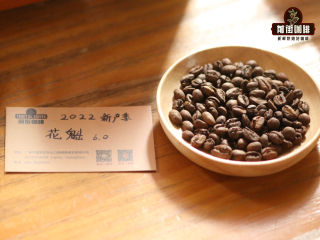
Flavor and taste characteristics and producing area information of Xidamo Huakui coffee beans the difference between Sakui and Yega Xuefei
What are the characteristics of Sidamo coffee and what does it have to do with Yega Xuefei? in addition to Sakui, what is the flavor of Sidamo coffee similar to Yega Xuefei, exquisite washing or sun-drying Sidamo, which also has the scent of flowers and oranges, and is worth as much as Yega Xuefei. The varieties in the two producing areas are similar, with medium-sized beans but also small seeds with dwarf plants. that

Introduction of Ethiopian coffee, characteristics of Ethiopian coffee beans
Following caf é (Wechat official account vdailycom) found that Beautiful Caf é opened a small shop of its own Ethiopia is the hometown of Arabica coffee, it is in the forests of the Kaffa region that you can see wild Arabica coffee. In Ethiopian, coffee is called Bun or Buna, and coffee beans (coffeebean) may be turned from Kaffa Bun
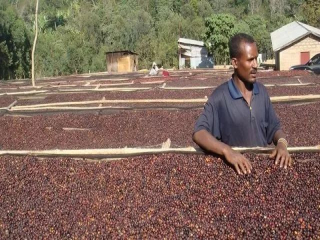
Ethiopian coffee bean grade introduction, why Ethiopian coffee beans are of different sizes?
Why do people usually buy Ethiopian coffee beans of different sizes? Even if it is the highest G1 coffee bean. Today I would like to explain to you why Ethiopian coffee beans are of different sizes. This involves Ethiopian coffee beans, and his grading has nothing to do with the size of coffee beans.

Introduction of taste grinding scale of varieties produced by Lim Manor in African coffee producing area
Introduction to the Grinding scale of the varieties treated in Lim Manor in African Coffee producing area Water washing: Grade-1;Grade-2 Solar: Grade-3;Grade-4;Grade-5 and Grade-1 several points to note: a) both washing and solarization, there is Gr-1, the condition is zero defect and Premium Cup. Whether it's washing or tanning, Gr-1 is the best of the boutiques or Cup of Exce.

Full of soft Yega Xuefei Aduo boutique coffee beans planting geographical location, climate, altitude is simple.
4. The grading system of grade Ethiopian coffee is not based on the number of items, but on the proportion of defective beans in raw beans. In October 2009, Ethiopia launched the ECX boutique coffee trading grading system. Q-Grader rated raw beans as follows: washed Yega Xuefei was divided into Grade 1 and Grade 2, and Solar Yega Xuefei was classified as G

How did Sidamo Honey Coffee come from? how to divide the grades of Sidamo coffee beans?
Professional barista communication please follow coffee workshop (Wechat official account cafe_style) washing: Grade-1;Grade-2 (G1G2) sun: Grade-1 and Grade-3Grade-5 (G1G3G4G5) production area: Ethiopia Oromia species: Ethiopia native species Haiba: 2000 treatment: washing factory name: coffee workshop site: Guangzhou Yuexiu Museum District Security

Grade analysis of Ethiopian coffee beans how to choose siphon coffee maker
Ethiopian coffee has the highest citrus aroma in the world. Whether instant coffee or freshly ground coffee, the aroma of orange or lemon can be smelled during extraction. The nose is characterized by strong floral, fruity, sour and sweet aromas, but the alcohol is slightly thicker or less dense. The biggest disadvantage is that it is easy to bake unevenly, especially sun-dried beans. Even the best Grade3 Harald sun-dried beans
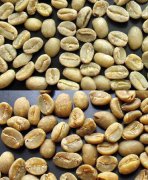
Grading of raw coffee beans
There are two ways to classify raw coffee beans, one is the filter number, and the other is the elevation. It is divided by the filter number, and the size is size in terms of the screen size. Round beans are generally smaller than flat beans, between 8-13 and 12-29. 8, 9, 10. 12, 13. 18. 29 = small, medium, ordinary. Quasi-big. Big, extra large. The bigger the size, the bigger the beans. Like SC-.